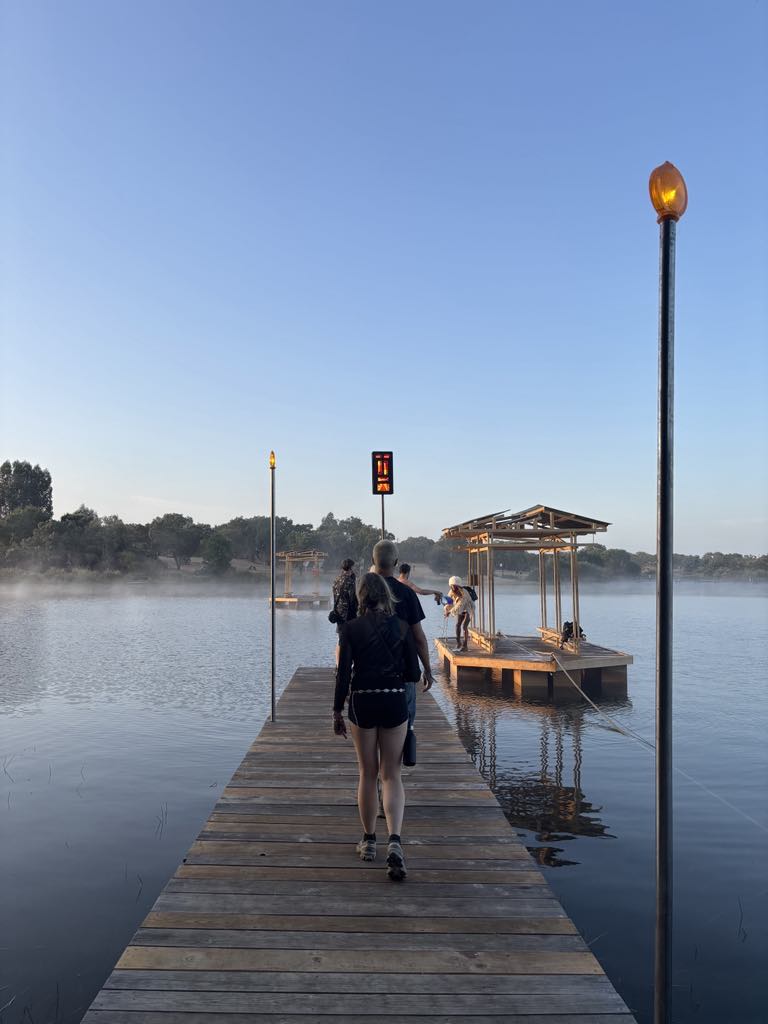

Waking Life, Maayan Nidam and mystic musings on the dancefloor
August 20, 2025
As a copywriter working in tech marketing, I’m faced daily with our new weird AI reality.
At the coalface of slop, AI-generated sounds have become something of a soundtrack, used at company meetings and events to fill a void. As someone passionate about music, I’ve cycled through several stages of grief here. The first, disbelief: has our CMO remixed Mariah Carey into a beach-house groover on the eve of the Christmas break? The second, unease: uncanny valley, etc. The third, denial: This can’t really take off or change the landscape of music… can it?
Unfortunately, it’s not just executives punishing their workforce with irritating chimes. An alarming amount of AI records have seen commercial success over the last 6 months.
Anonymous creators of AI bands like 'Breaking Rust' and 'Velvet Sundown' are using deep learning and neural networks to analyze musical patterns, components and song structures to create “original” compositions. The result is sterile music, the lump sum of the genre it’s trying to emulate.
The moral issue in training an LLM on the work of an original artist who goes unpaid and uncredited doesn't need spelling out. But the trench this technology will continue to dig between originality, innovation and novel cultural moments is a problem less discussed.
Innovative cultural (+ counter cultural) moments are shaped by the zeitgeist, an ineffable prevailing cultural mood.
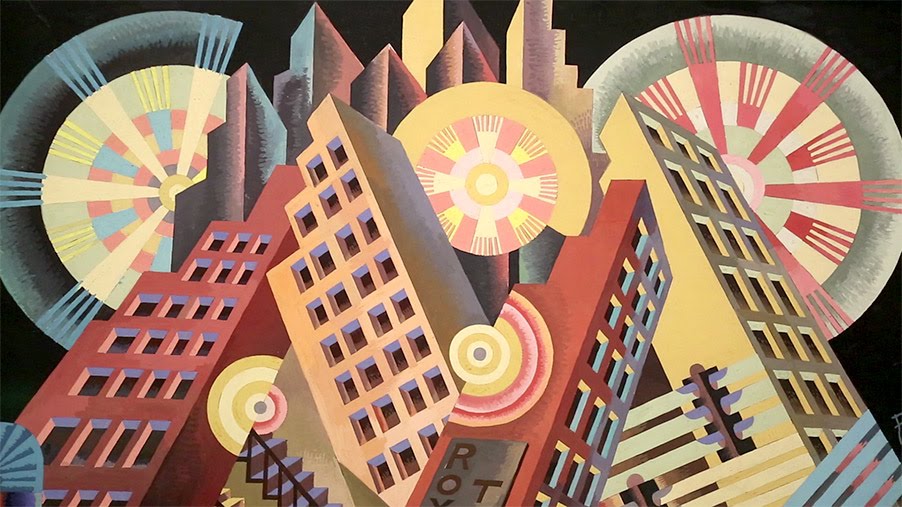
Futurism was molded by a new era of industrial and economic advancement in Italy. Brutalism was a pragmatic, socially conscious and austere response to the post-war rebuild. The minimal sound and design phenomenon of the 90s and 2000s mirrored a period of rapid technological acceleration and maximalist pop in the charts.
But in an era of hyper-tailored consumption, the zeitgeist is fractured and our ability to create tangible and cohesive cultural movements as a society is lost.
]Critics like David W. Marx see endless film reboots, recycled pop and nostalgia loops as evidence of this phenomena and point the finger firmly at Neoliberalism.
This might go too far. The period Francis Fukuyama labelled the End of History, the triumph of Western democracies and the Neoliberal order over the alternative mode of rule (℅ the Soviet Union) coincided with Britpop, Grunge, and the genuinely innovative Acid House. With its hyper-personalized feeds that leave no time for shared cultural experience, social media goes much further in explaining things.
Regardless, the broader point stands: at some point in the not-so-distant past, our ability to produce innovative, cohesive art that resonates with youth or society collectively, diminished.
This isn’t to say innovative art isn’t being created, there’s tonnes of that around and there always will be. It's not to say art isn’t connecting with millions either. This is about the type of stuff that brings on a tangible cultural response - art that connects with society, traces with an aesthetic and is built on some sort of coherent theoretical or political foundation.
While some international scenes have thrived in the social media age because of the feed rather than despite it, it's impossible to ignore the constant recycling of genres, sounds and structures that dominate the modern European landscape today.
House and techno have suffered from a particular dearth of innovation. House music cycles through the predictable phases of electro, minimal, depth and darkness, while mainstream techno seems stuck in a loop of tempo change and pop infusion. Reconceptualizing established underground electronic music as “folk art” is a convincing, albeit depressing, take.
This may seem like a bit of a tangential ramble. Social media and AI are disparate albeit related topics today, but It’s no stretch to recognize AI-generated music - which takes the sum of the parts of a genre and cobbles together something generic but good enough - will compound the problems above. How can culture look forward when the output is an artificial regurgitation of what came before?
With news in December that Universal, Sony and Warner have penned deals with Klay, an AI music streaming and generation platform, there’s a very real possibility the technology is primed to become the backbone of mainstream music production and consumption faster than we might expect.
Uber-personalization and AI music promoted through new generative social media platforms paint a dystopian picture on an already dark canvas.
So where does that leave us?
While all pretty bleak, it’s encouraging to see voices like Derrick Gee championing sounds that feel “human-first” and error prone. And this is a trend we can only hope fully matures in 2026.
Some larger organizations are making some positive steps here too. In early January, Bandcamp took the surprisingly brave decision to ban music “generated wholly or in substantial part by AI”. Geezer announced yesterday that they've followed suit too.
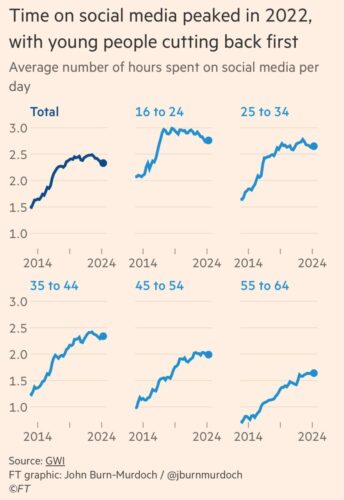
Of course there’s every chance artists and a younger generation can reclaim the use of AI, preserving creative output and using the technology to “get there faster” with tools that enhance mixing and mastering. There’s some interesting data out there that articulates Gen Z’s resistance to AI in a creatve context, and when paired with the fact that social media usage among the cohort peaked three years ago (and has declined every year since) hope grows somewhat.
In an electronic music context we can still take solace in the fact that mistake-prone live sets, analogue mixing and the very act of throwing a party with friends depends on something a machine cannot yet synthesise: human imperfection, empathy and communion.
The future might lie in a third way, where AI acts as background infrastructure, but the cultural value shifts toward the imperfect, the flawed, the deeply human. A world where innovation re-emerges not despite technology, but because audiences start actively rejecting the smooth predictability of AI.